Improving Ticket Sales & Booking Conversion
Maggie’s Rock ’n’ Rodeo
Role
Lead Designer
Tools
Figma, VS Code, Squarespace
Sector
Hospitality
Project overview
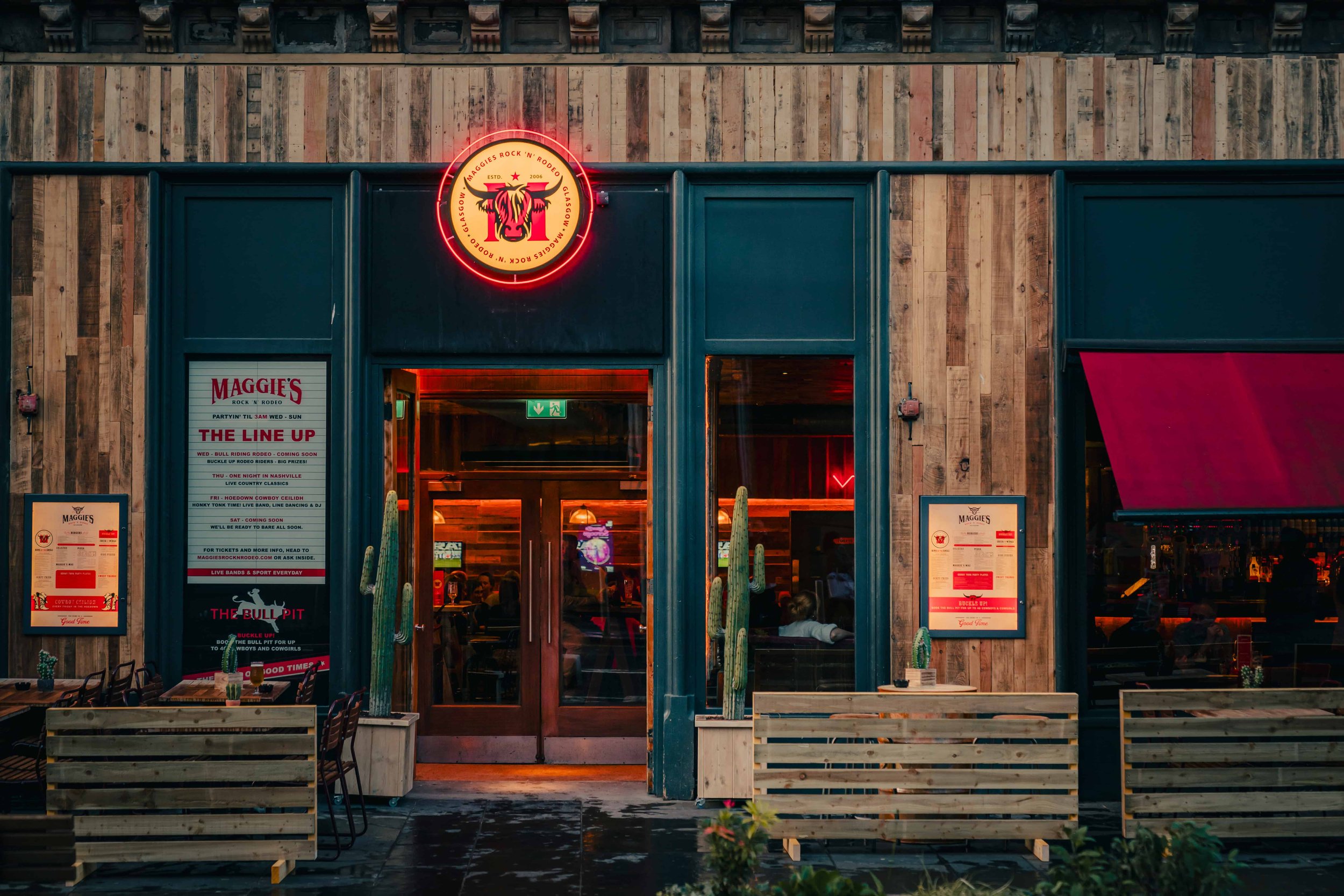
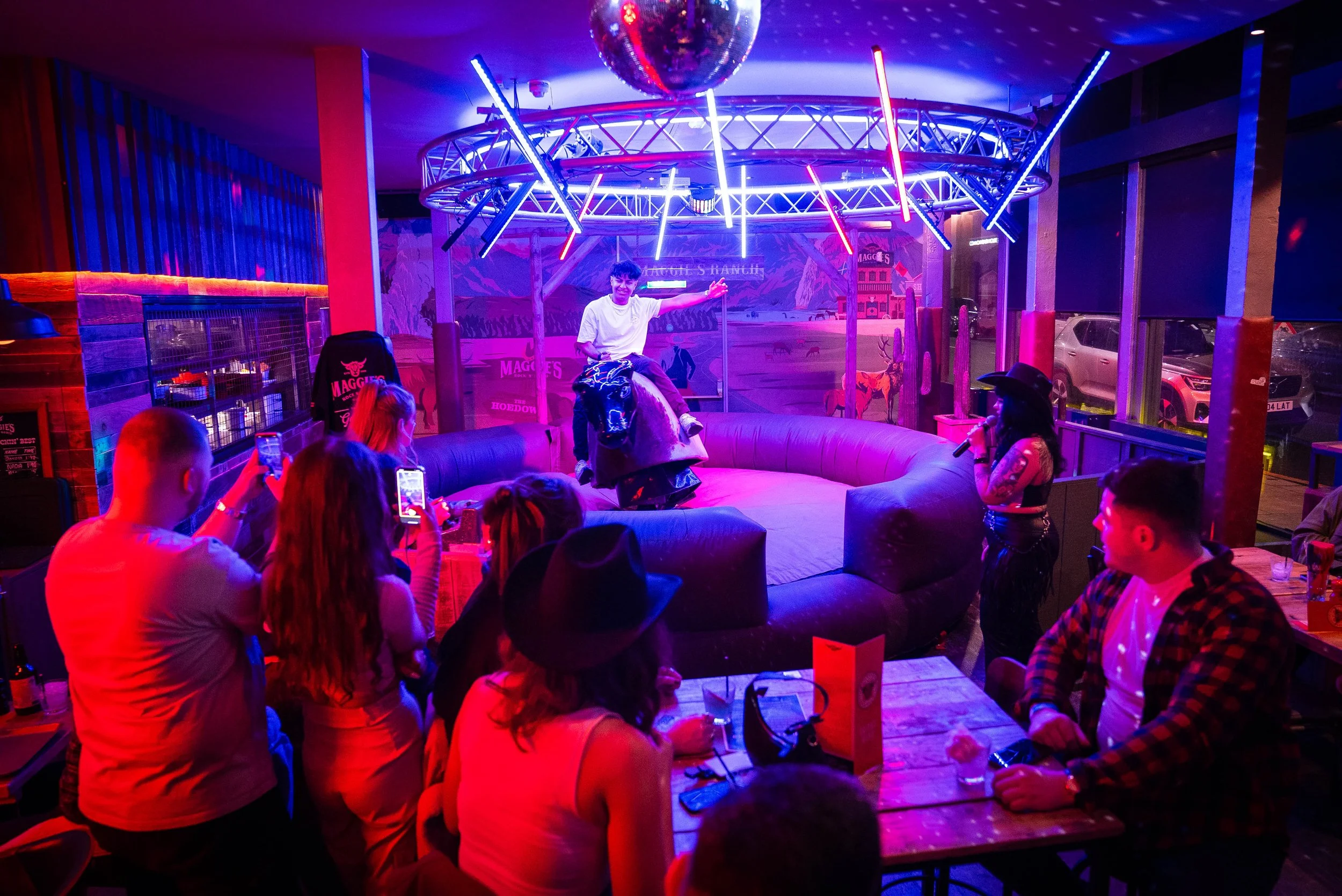
Maggie’s Rock ‘n’ Rodeo is Scotland’s first country-themed bar, hosting regular live events and ticketed experiences.
As the venue expanded its event lineup, the website struggled to keep up. Events competed for visibility, information was difficult to scan, and many users dropped out before completing bookings.
The goal of this project was to improve event discoverability and booking conversion, while working within the constraints of the venue’s existing systems.
Goal
Improve event discovery and increase ticket bookings
Constraints
Bookings handled through Design My Night which would not be replaced
Website built on Squarespace, limiting backend flexibility
Results
+0%
Ticket Sales
+0%
More users exploring past the home page
+0%
Faster Load times
+0%
More users reaching the event booking pages
1. research & discovery
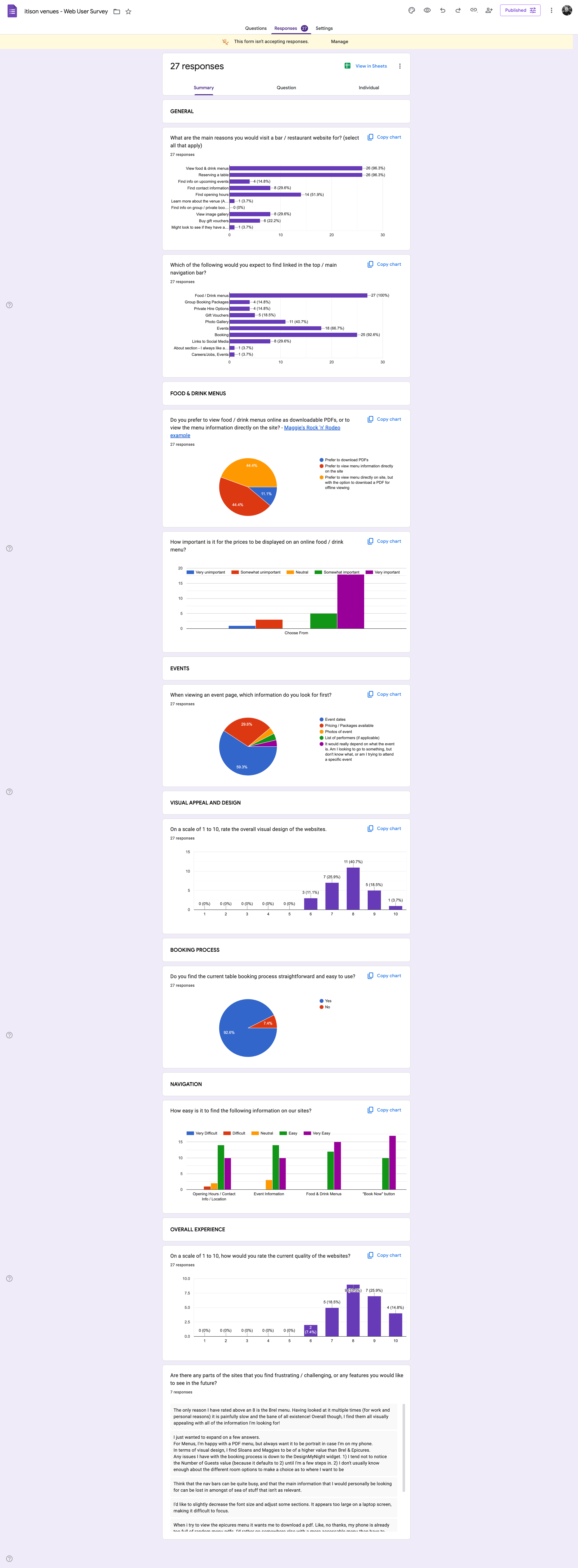
To understand why users were dropping out of the booking journey, I conducted a full audit of the existing website.
Research Methods
GA4 Analytics to identify drop-off points and user behaviour
PageSpeed Insights for performance analysis
Accessibility & SEO Audits
User Surveys to capture direct feedback
Competitor analysis
Key Findings
Events were difficult to discover
Events were spread across multiple pages with no clear hierarchy, meaning new events competed for visibility.
Important information was hard to scan
Users struggled to quickly identify key details such as event time, price, and availability.
Booking Journeys lacked clarity
Analytics showed that only around 10% of users who began the booking process completed it, suggesting friction within the booking flow.
2. planning & strategy
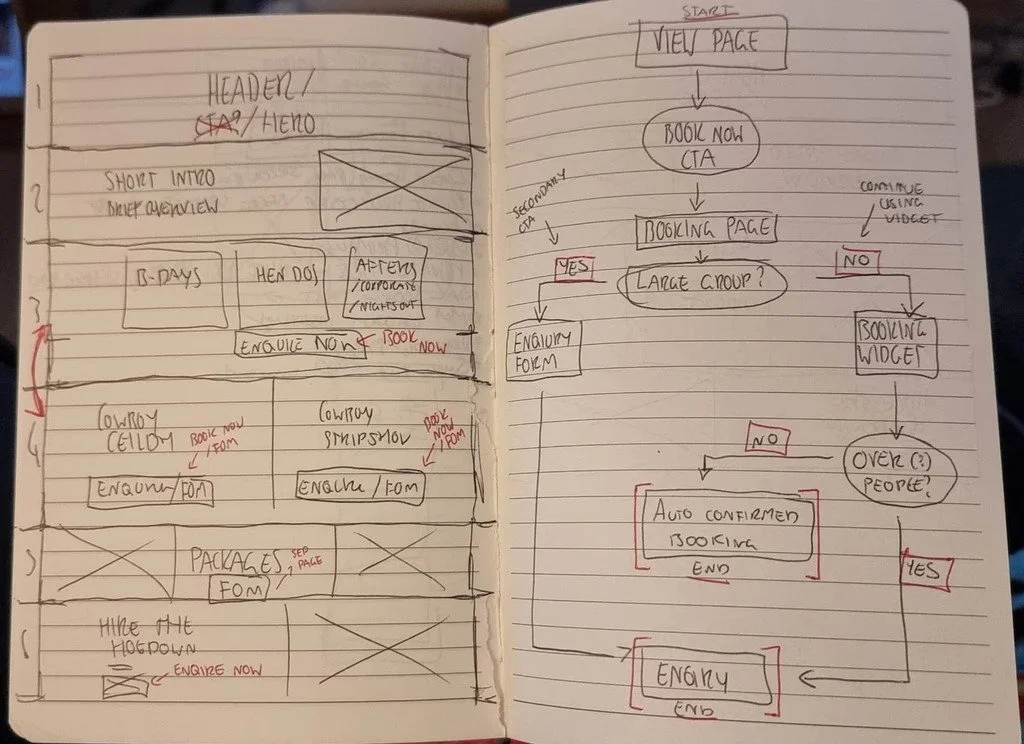
Using insights from the research phase, I focused on three primary user goals:
Book a table
Buy tickets for an event
Hire the venue for a private event
I mapped user flows for each journey to identify friction points and opportunities to simplify navigation.
Key design questions
How might we make event information easier to scan?
How might we reduce friction in the booking journey?
How might we design a structure that supports frequent new events?
Information Architecture
The site structure was redesigned to clearly separate the three primary user journeys:
Events & ticket sales
Table bookings
Private hire
A revised sitemap ensured new events could be added easily without disrupting the overall structure.
3. Design & Prototyping
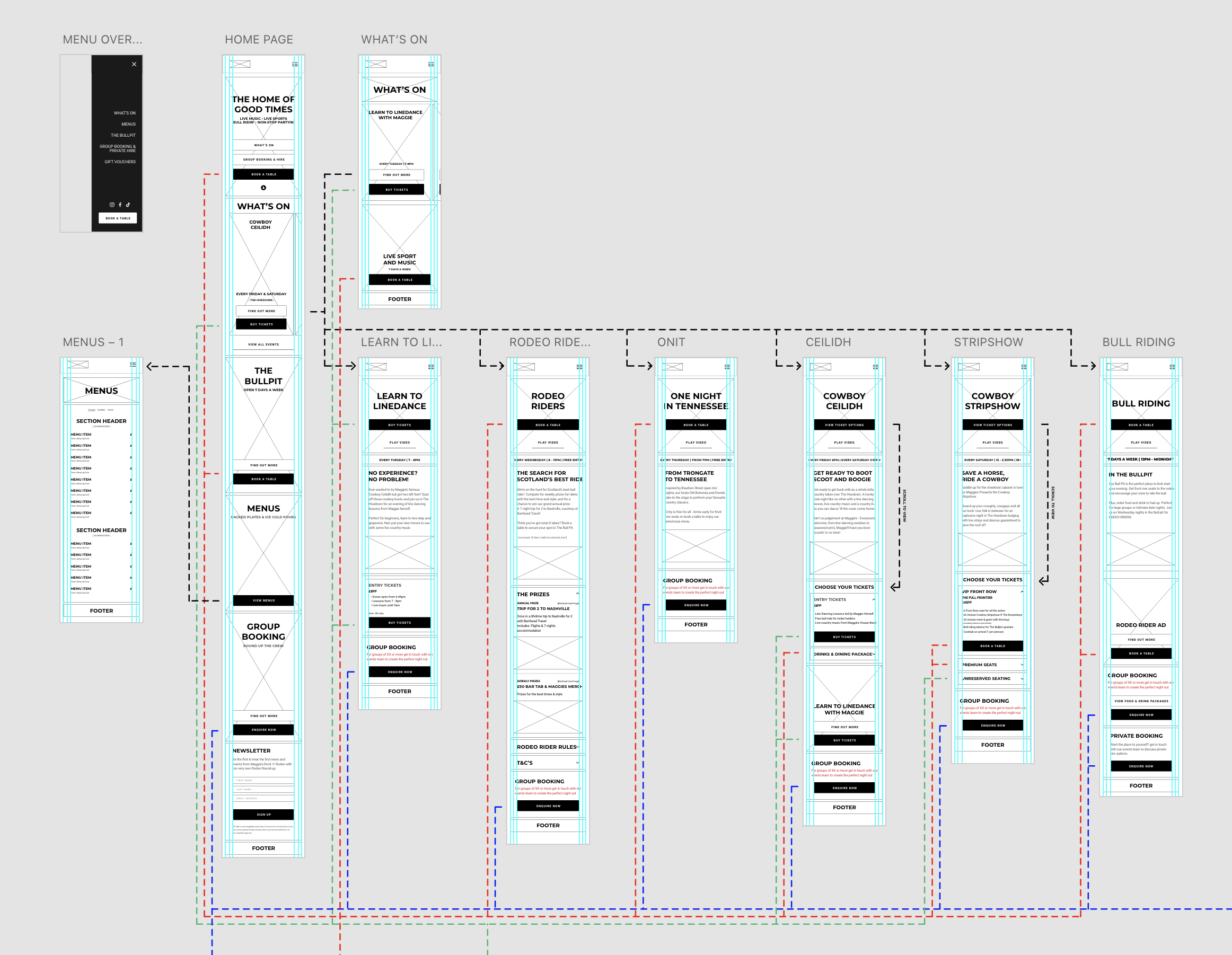
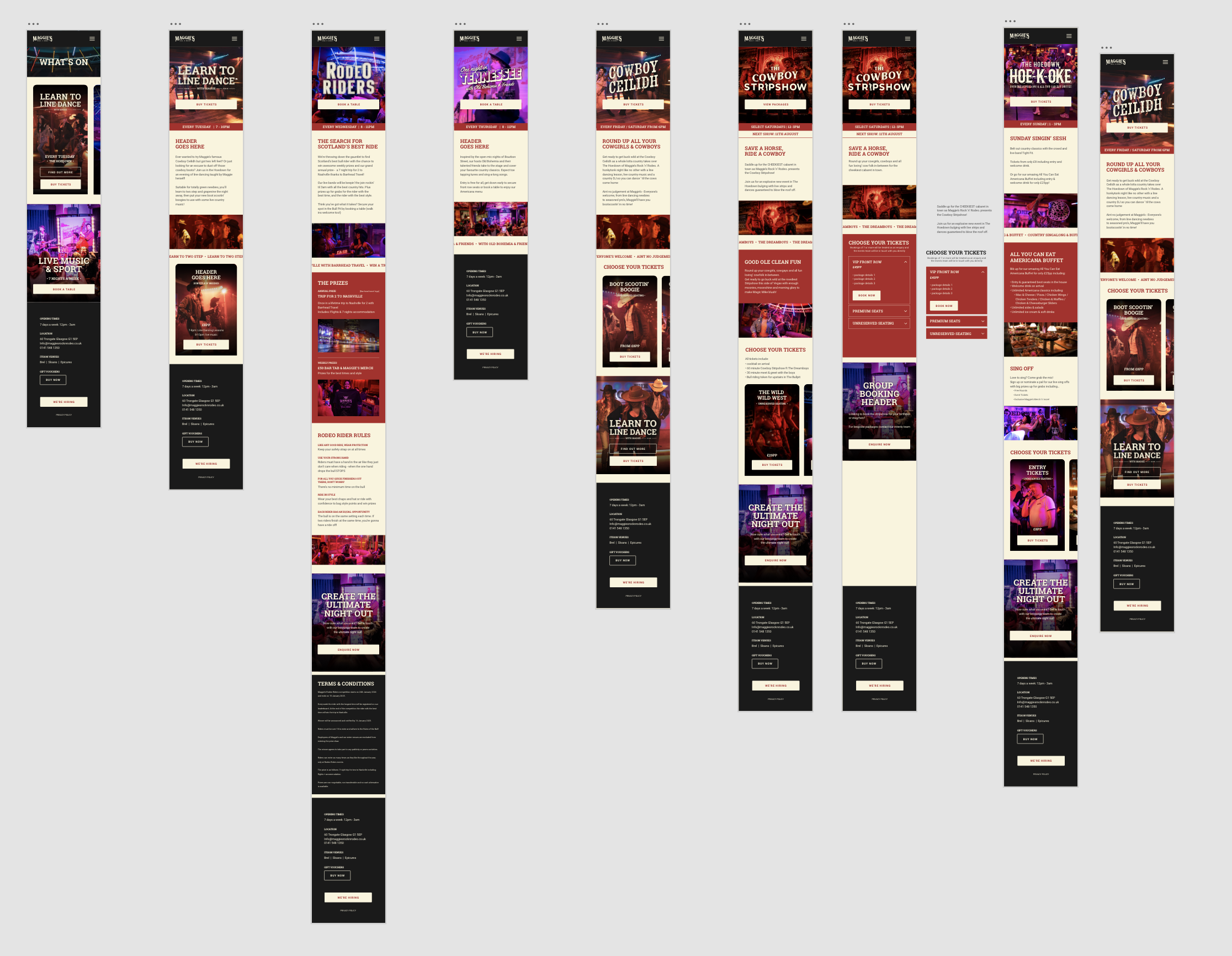
Wireframes & Prototyping
Wireframes were created to explore improvements to:
Navigation structure
Event page layouts
Booking pathways
Content hierarchy
The focus was on making key information quickly scannable and ensuring booking actions were easy to reach.
Low and High fidelity prototypes were then shared with key stakeholders for feedback before developement.
Improving Visual Clarity
The original site used textured backgrounds and colour combinations that reduced readability.
To improve usability while maintaining the brand identity, I:
Removed distracting background textures
Updated colour combinations to meet WCAG contrast standards
Improved visibility of key CTA’s
These changes made it easier for users to identify events and booking actions quickly.
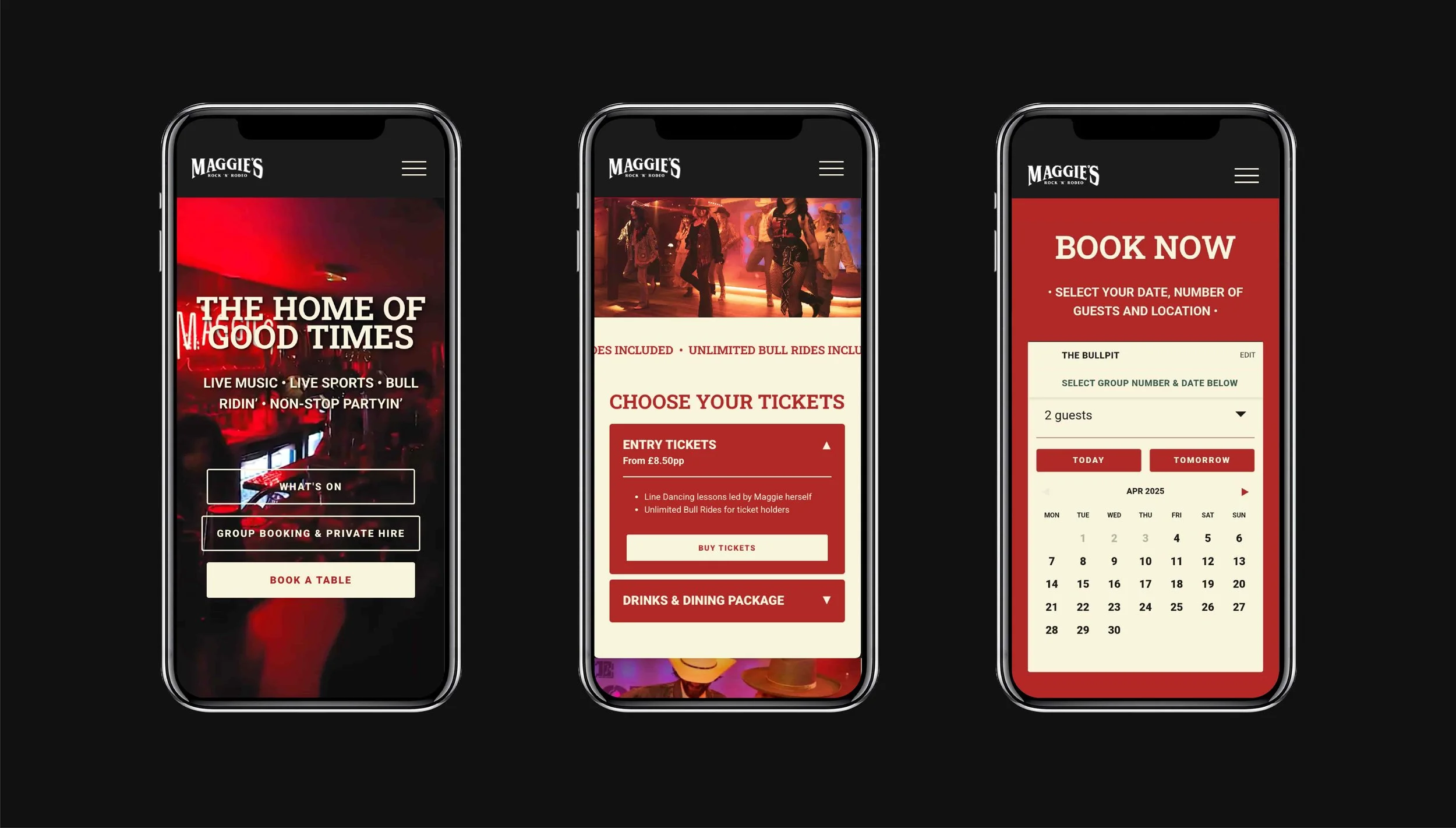
Optimising the Booking Experience
Bookings are handled through Design My Night, which provides an embedded widget. While functional, the default widget felt visually disconnected from the site and offered limited customisation.
To improve the experience, I implemented custom CSS to:
Better integrate the widget with the site’s design
Improve the mobile booking layout
Create a more cohesive booking flow
Performance Optimisation
During development, I continuously tested pages using PageSpeed Insights to improve page load speed and reduce page size.
This resulted in faster loading pages and improved performance scores across the site.
4. Results
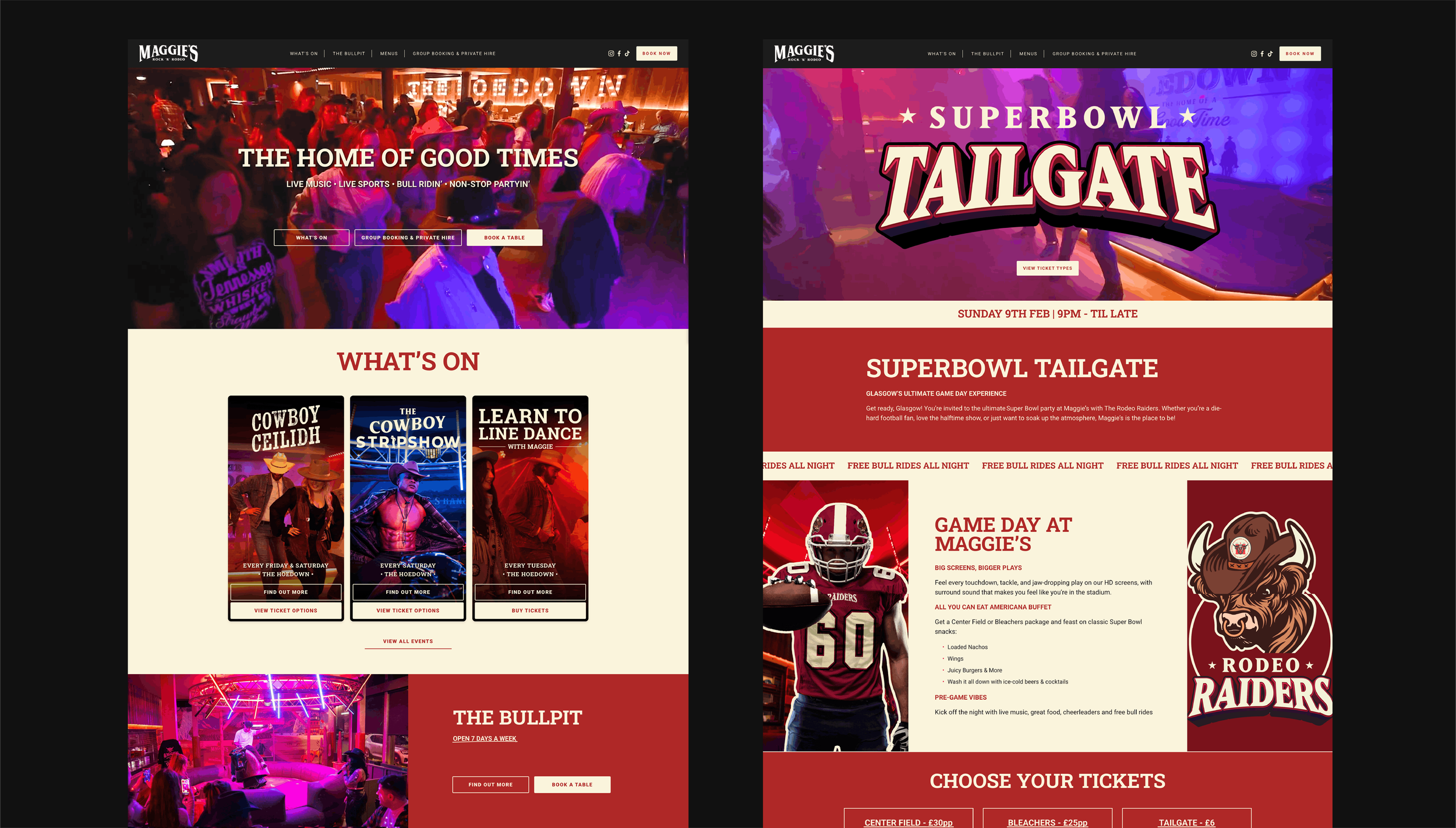
The redesigned site produced great improvements in both engagement and booking conversion.
+72% increase in ticket sales
Clearer event pages and improved discoverability increased ticket purchase
+56% more users reaching booking pages
Improved navigation helped more users reach key booking actions.
+37% more users exploring beyond the home page
A clearer structure encouraged deeper site exploration
+17% faster page load times
Performance improvements reduced friction across the site
Outcome
The redesign successfully improved the usability and scalability of the site while maintaining the venue’s brand identity.
By restructuring the information architecture, improving scannability, and optimising the booking flow, the site now supports the venue’s growing events calendar and provides a more effective platform for driving ticket sales.